

10 Jul,2026
The Ultimate Destination Wedding Blueprint: From Resort Design to Seamless Execution By Arcmax Architects, call 09898390866 for Resort design worldwide.
A destination wedding is no longer just a celebration; it is a complete experience that combines hospitality, architecture, landscape, luxury, culture, and flawless event management. Today’s couples and families want more than a beautiful venue. They want a resort that can host every wedding function smoothly, accommodate guests comfortably, create memorable photo moments, and deliver a royal hospitality experience from arrival to departure. This is where a well-planned destination wedding resort becomes the real foundation of a successful wedding.
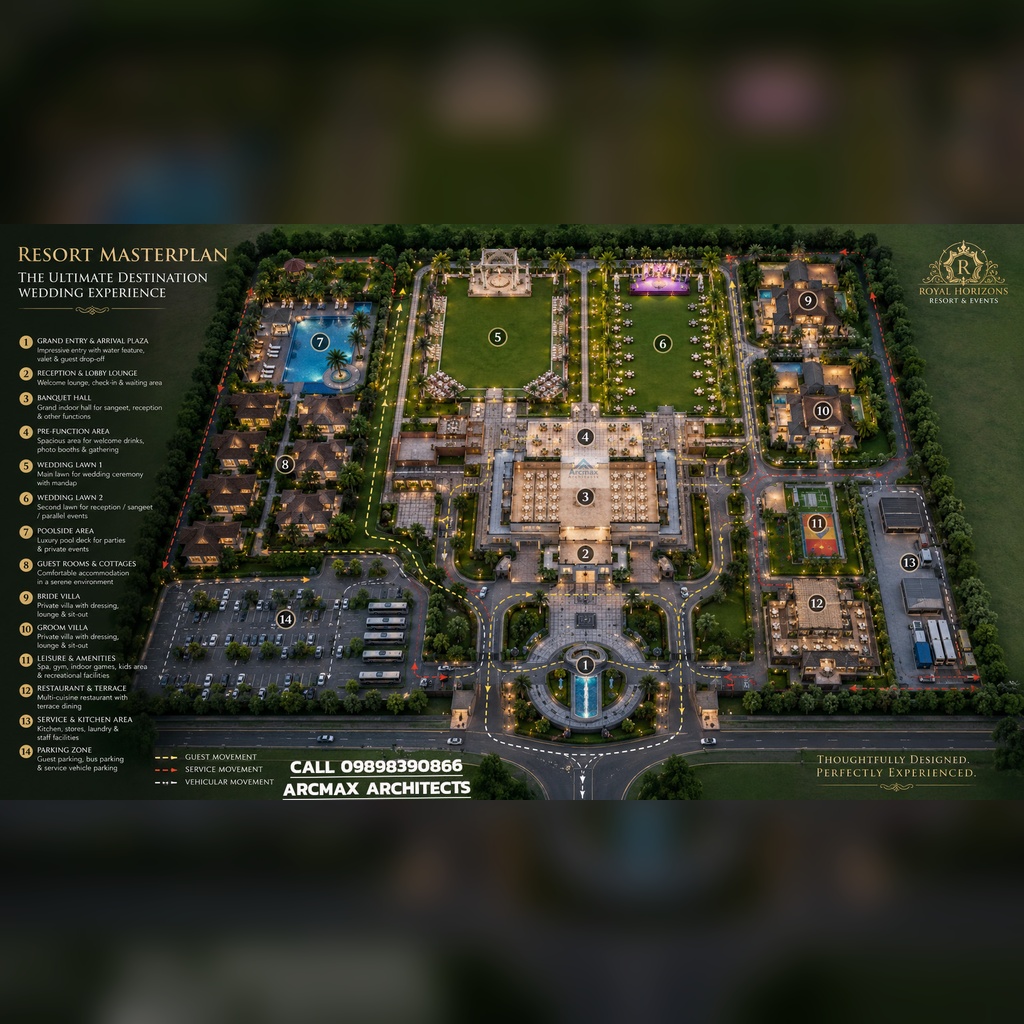
A perfect destination wedding starts much before decoration, catering, and event planning. It begins with the right resort design. The layout, entry experience, banquet placement, wedding lawns, guest rooms, parking, service movement, kitchen access, bride and groom villas, and landscape zones all play a major role in how smoothly the event will function. A poorly planned resort can create traffic congestion, guest confusion, service delays, noise conflicts, and management problems. On the other hand, a thoughtfully designed resort can make every event feel effortless, grand, and luxurious.
1. Understanding the Vision of a Destination Wedding Resort
The first step in creating a destination wedding blueprint is understanding the overall vision. Is the resort meant to feel like a royal palace, a heritage haveli, a modern luxury retreat, a tropical resort, or an eco-friendly nature destination? The design theme must match the target audience, location, climate, and wedding market demand.
For Indian weddings, the resort should support multiple functions such as haldi, mehendi, sangeet, reception, wedding ceremony, cocktail night, family lunch, private rituals, and post-wedding brunch. These functions often happen over two to three days, so the property must be planned as a complete wedding campus, not just a banquet hall with rooms.
A strong design vision helps define the arrival experience, architectural style, landscape character, lighting mood, guest circulation, and event zoning. When the concept is clear, every part of the resort feels connected and premium.
2. Site Planning and Zoning
Site planning is the backbone of destination wedding resort design. The resort should be divided into clear zones: arrival and reception, event zone, accommodation zone, leisure zone, service zone, and future expansion zone.
The entry should create a strong first impression. A grand gate, landscaped driveway, water feature, arrival court, and reception cum waiting lounge help guests feel that they have entered a premium wedding destination. The arrival area should also handle cars, buses, valet movement, luggage drop-off, and guest check-in without confusion.
The event zone should include the banquet hall, pre-function area, wedding lawns, mandap area, stage, buffet zone, and service kitchen access. It is always better to place banquet and lawn areas close to each other so indoor and outdoor functions can be managed easily. For large destination wedding resorts, two separate wedding lawns are highly beneficial. One lawn can be used for the wedding ceremony while the other can be used for reception, sangeet, or parallel events.
Accommodation should be placed in a quieter zone, slightly away from loud event areas but still connected through comfortable pathways. Guest rooms, cottages, villas, and premium suites should provide privacy, views, and easy access to event spaces.
3. Designing the Wedding Lawns
Wedding lawns are the heart of a destination wedding resort. A successful lawn is not just a large green space. It must be planned with proper guest capacity, stage visibility, mandap placement, buffet circulation, entry points, service access, lighting points, and emergency movement.
Each lawn should have a defined entry experience, preferably through a landscaped walkway, floral arch, or ceremonial court. The mandap should be placed at a visually strong location, while the stage should be designed for photography, performances, and guest interaction. The buffet area should be accessible but not disturb the main ceremony or seating layout.
A premium resort should ideally provide two large lawns with independent access. This allows the property to host multiple events or offer different themes within the same wedding. One lawn may have a royal palace setting, while the second may have a garden, poolside, or contemporary celebration theme.
4. Banquet Hall and Pre-Function Design
The banquet hall must be planned as a flexible indoor celebration space. It should support functions like sangeet, reception, ring ceremony, conferences, family dinners, and backup events during rain or extreme weather. The size of the banquet hall should be decided according to expected guest capacity, table arrangement, stage size, dance floor, and service requirements.
A grand pre-function area is equally important. It acts as a buffer between the banquet hall and outdoor spaces. It can be used for guest gathering, welcome drinks, photo booths, live counters, or waiting during event transitions. High ceilings, chandeliers, heritage arches, glass openings, and elegant flooring can make the pre-function zone feel luxurious.
The banquet hall should have separate service entry, kitchen connection, store area, staff circulation, and loading-unloading access. This ensures that catering and event operations happen smoothly without disturbing guests.
5. Guest Accommodation and Hospitality Experience
A destination wedding resort must provide comfortable accommodation for families, relatives, and VIP guests. Rooms should be designed with a balance of luxury, privacy, and operational efficiency. Depending on the resort scale, accommodation may include hotel rooms, premium suites, cottages, villas, and private pool rooms.
Bride and groom villas are a very important feature in modern wedding resorts. These villas should be located near the event zone but should also provide privacy. They can include dressing rooms, lounge spaces, makeup areas, private sit-outs, and photography corners. Separate bride and groom villas make preparation easier and add a premium value to the resort.
Guest movement from rooms to event areas should be comfortable, shaded, well-lit, and clearly marked. Internal buggy routes, covered walkways, landscape courts, and signage improve the overall guest experience.
6. Landscape, Water Features, and Photo Points
Destination weddings are highly visual, and every corner of the resort can become part of the wedding album. Landscape design should create multiple photo-worthy moments. Royal courtyards, fountains, pergolas, floral pathways, water bodies, sculpture gardens, deck areas, poolside lounges, and terrace viewpoints can enhance the resort’s visual appeal.
A central landscape spine can connect the entrance, reception, banquet, lawns, cottages, and leisure areas. This creates a smooth guest journey and makes the property feel grand. Night lighting is also essential. Warm architectural lighting, pathway lights, fairy lights, tree uplighting, and façade illumination create a magical wedding atmosphere.
7. Food, Service, and Back-of-House Planning
Behind every successful wedding is strong service planning. Guests may not see the service areas, but they will feel the impact if service is poorly planned. The kitchen should have proper connectivity to the banquet hall, buffet zones, lawns, and service yards. Separate movement for staff, vendors, catering vehicles, and housekeeping is essential.
Back-of-house areas should include main kitchen, banquet kitchen, store, laundry, housekeeping, staff changing rooms, electrical room, DG room, waste management area, security room, and service parking. These areas should be hidden from guest view but easily accessible for operations.
Good service planning reduces delays, improves cleanliness, supports large-scale events, and helps the resort maintain a premium hospitality standard.
8. Parking and Traffic Management
Parking is one of the most ignored but most critical parts of destination wedding resort planning. Large weddings bring cars, buses, vendor vehicles, decorators, caterers, photographers, and logistics teams. The site must have organized parking with clear entry and exit movement.
A separate valet drop-off, bus parking zone, VIP parking area, and service vehicle route can prevent traffic jams. Internal roads should have proper turning radius and should not create dead-end confusion. During large events, guest arrival and departure must feel smooth and safe.
9. Leisure and Resort Amenities
A destination wedding resort should also work as a holiday destination. Guests often stay for two or three days, so amenities like swimming pool, spa, gym, restaurant, terrace restaurant, children’s play area, café, indoor games, and garden lounges add extra value.
These amenities allow guests to relax between wedding functions. A poolside brunch, terrace dinner, or garden breakfast can become part of the wedding itinerary. For premium resorts, wellness zones and private experiences can create a stronger luxury identity.
10. Seamless Execution Through Smart Design
Execution becomes easier when design supports operations. Every event planner, decorator, caterer, photographer, and resort manager benefits from a smart masterplan. Proper zoning, storage, power points, service access, guest routes, lighting infrastructure, and flexible open spaces reduce last-minute problems.
A destination wedding resort should be designed for both beauty and performance. It must look impressive in photographs, function smoothly during peak wedding hours, and remain practical for daily resort operations.
Conclusion
The ultimate destination wedding blueprint is a combination of architecture, landscape, hospitality, event planning, and operational intelligence. A beautiful resort may attract clients, but a well-planned resort creates unforgettable experiences. From grand arrival to luxurious rooms, from spacious wedding lawns to efficient service areas, from banquet design to seamless guest movement, every detail matters.
A successful destination wedding resort is not only a venue; it is a complete celebration ecosystem. When design and execution work together, the result is a wedding destination that guests remember, families trust, and event planners love to use again and again.
Want a Quotation please fill the form
Recent Posts


